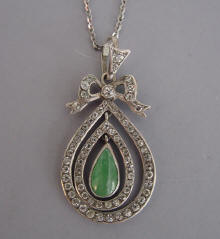
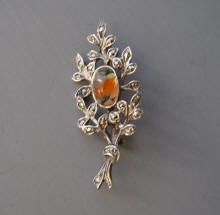
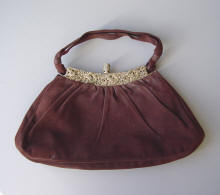
PASTES according to Antique Paste Jewellery by Malcolm David Samuel Lewis, is "glass which has been cut into gem-like forms". They were used extensively from the 1700s to the early 1900s and were a desired material in themselves, not a replacement for diamonds and gem stones. Invented by Georges Frederic Strass (1701-1773) in 1730, they could be set in silver, sterling or gold and could have been foiled or unfoiled (although 18th century paste usually foiled). Foiled pastes are usually seen in closed-backed settings where the foil provided added reflection and brilliance. Paste could be much more readily cut and shaped than diamonds, making a close-fitting pave look achievable. One quality that makes paste so desirable is the and a variety of shaped and sized stones. Perfectly round stones will not be found in the early and best paste jewelry, nor will claw settings and knife-edge work. Cut down settings gave way to the coronet setting only in the 19th century. Paste could be fashioned in different colors, including an opalescent cabochon similar in look to opals. Most paste came from France, England, Spain or Portugal. Some later pieces were hallmarked.
The introduction of paste circa 1730 made the term "Age of Paste" applicable to the 18th century and their shimmer is as appealing today as it was when they were first shown. According to Antique Paste Jewellery, paste was only made from around 1700-1865, but the term has been more generalized to include pieces up to the 1930-40s, and for some it is used to describe jewelry even later than that. But beware... vintage paste has been reproduced for many years and it can be extremely difficult to distinguish old from new. Findings may also be replacements so it is good, as always, to do your research (references below) and buy from a reputable dealer.
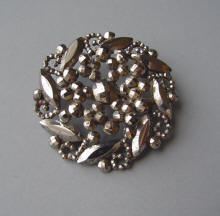
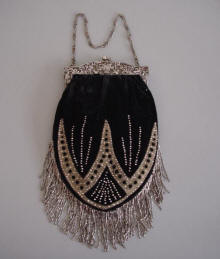
CUT STEEL is faceted polished steel studs riveted to a steel backing to fashion jewelry and ornaments, buttons and chatelaines. Popular from the Georgian through the Victorian eras, cut steel jewelry catching the warm glow of candlelight must have been something to behold. Motifs varied from the simple to the sublime, with multiple layers and densely packed studs. Designs could be enhanced by the use of varying sized studs as well. Each stud might have up to 15 facets, and in general the finer and older the piece the more facets the studs will have. Made in both England and Europe, this style of jewelry fell out of favor by the turn of the 19th century, but it never falls out of favor with me.
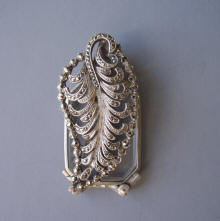
Woodstock was a small town outside Oxford, England, site of the most famous cut steel workshops circa 1760s. A jeweler during that time may have been selling cut steel jewelry a price higher than gold. Steel jewellery became fashionable in France and its enormous cost made it popular with the nobility. Napoleon, on his second marriage to Marie-Louise of Austria commissioned a whole parure of cut steel for his new bride. By 1775, Mathew Boulton was the most famous steel worker, first in London and then in Birmingham. By the 1790s the industry was producing its finest work but the French Revolution did rob the British workshops of their best customers. Though many shops in England closed, the French cut steel industry survived to the turn of the 19th century. Since cut steel will rust if it gets damp and it is difficult to polish or clean, much of it has been discarded and a relative few good pieces remain today. In general, the smaller the pieces of cut steel used in the jewelry, the earlier the item was. Later jewelry had larger cut steel brads. MARCASITES used in costume jewelry are pyrites, similar to Fools Gold, and while they have been used in jewelry for centuries, they had a great spike in popularity during the Victorian to the Art Nouveau eras. They have been used both before and since, and are often but not always set in silver tone rather than gold tone. Some have trouble telling cut steel from marcasites, but it is really easy. Cut steel are faceted steel brads set into a metal backing. Once you see how that looks from the back, you will be able to distinguish the difference readily. Marcasites are either prong set or glued in to a setting.
Marcasite jewelry is still being made today by everyone from Judith Jack to Asian makers and some of it is really lovely. But if you only want a vintage piece, be sure to do your homework by looking and reading and buy from a reputable dealer.
WOULD YOU enjoy wearing or collecting any of these types of jewelry, you can start by clicking below:
PASTE JEWELRY click here
CUT STEEL JEWELRY click here
MARCASITE JEWELRY click here
To buy these wonderful pieces for your collection, please CLICK HERE and enter the word in the search engine at the top right of the web site.
To see our gallery and references about jewelry, CLICK HERE and enter the word in the search box.
REFERENCES:
Georgian Jewellery, 1714-1830 by Dawes & Collings
Victorian Jewelry by Davidov & Dawes
Warmans Jewelry, 3rd Edition by Christie Romero
Jewels and Jewelry by Clare Phillips and Ian Thomas
Cut-Steel and Berlin Iron Work by Anne Clifford
|